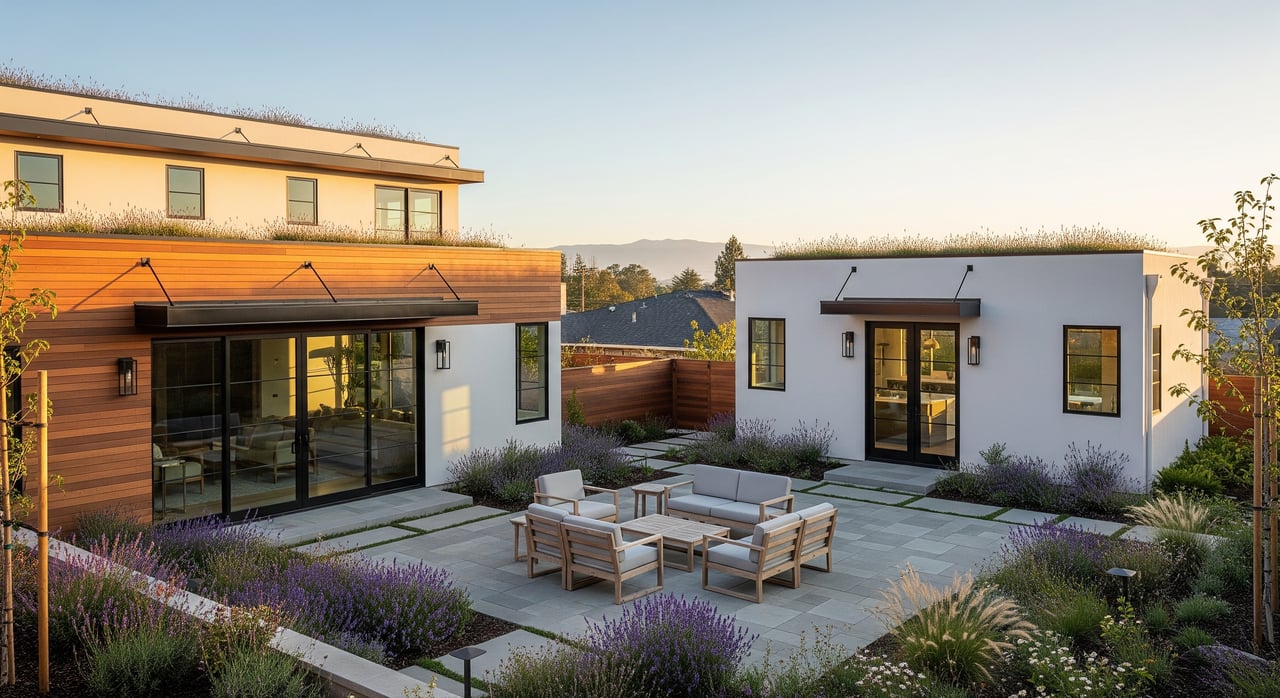
Mountain View ADU Rules and What Owners Should Know
December 4, 2025
December 4, 2025
Thinking about adding an accessory dwelling unit to your Mountain View property? You are not alone. An ADU can create flexible living space for family or long-term rental income that supports your goals. In this guide, you will learn the rules that matter, how the process works, what it might cost, and how to set up your project for a smooth resale. Let’s dive in.
An accessory dwelling unit is a small, independent home on the same lot as your primary residence. It can be detached, attached, or created by converting existing space. California law strongly supports ADUs, and Mountain View implements those rules with local standards, fees, and procedures. Your project must meet objective requirements to qualify.
Under California law, cities must review compliant ADU applications through a ministerial process. That means no public hearing and no subjective design review. If your plans meet objective standards, the city must approve the ADU.
State law allows ADUs but lets cities set objective numeric limits. A common reference point is up to 1,200 square feet for a detached ADU, though local caps may be smaller. Parking rules are flexible in many cases, especially when close to public transit. Setbacks can be reduced for ADUs compared to main homes, but you still need to meet safety and building codes.
Fees must be reasonable and proportionate. Many state provisions limit impact fees for units under 750 square feet, which can lower total costs. Owner-occupancy rules have been relaxed under state law for most ADUs, while junior ADUs (JADUs) may have different requirements. Always confirm the latest local practice before you plan your layout and lease strategy.
State ADU laws do not control short-term rentals. Mountain View sets its own rules for stays under 30 days. If you plan to host short-term guests, check local licensing and restrictions first.
Every property is different. Before you hire a designer, verify the following with Mountain View’s Planning and Building staff:
Tip: An optional pre-application meeting or planning counter review can flag issues early and save time later.
Confirm zoning, setbacks, lot coverage, and utility capacity with the City. Review HOA rules and any deed restrictions. Walk your site to plan access, privacy, and potential parking solutions.
Engage a designer or ADU builder to prepare a site plan, floor plans, elevations, and basic structural and utility notes. JADUs created within existing space often need simpler plans. Align your design with objective standards to streamline review.
Planning review is ministerial when you meet the rules and typically takes 2–8 weeks depending on completeness. Building plan check for structural, electrical, plumbing, and energy compliance can take 4–12 or more weeks, often with multiple cycles. Submitting a complete, coordinated set reduces back-and-forth.
After permits are issued, finalize bids and schedule work. Conversions and attached units often finish in 3–6 months. Detached ADUs that need new foundations, trenching, and utility upgrades can stretch to 6–9 months or more. City inspections are required during construction, and you will need a final inspection to legally occupy or rent the unit.
Costs vary based on site conditions, size, and level of finish.
Get multiple local bids and ask for detailed scopes that include utility trenching, foundation, finishes, and permit costs.
Plan for planning and building permits, utility connections, and school or impact fees where applicable. Many state provisions limit impact fees for ADUs under 750 square feet, which can reduce costs for smaller footprints. Confirm timing of fee payments so you can manage cash flow.
An ADU is considered new construction and usually increases your property’s assessed value. Santa Clara County will assess the improvement value of the ADU, and your tax bill will adjust. Ask the Assessor’s office how they value typical ADUs so you can budget accurately.
Estimate rent by comparing to local studios and one-bedroom homes with similar size and finish. Consider whether you will include utilities and how that affects pricing. Underwrite net cash flow after allowing for loan costs, increased taxes, insurance, maintenance, and a normal vacancy factor. In high-rent markets like Mountain View, ADUs can improve long-term cash flow, but payback periods depend on build cost and rent.
Keep everything. Final permits, plan sets, inspection records, and any recorded documents should be accessible for buyers and lenders. A permitted and properly finaled ADU typically adds marketability and value, while an unpermitted unit can reduce value and complicate financing.
Create a functionally independent space with a separate entrance, good sound insulation, and a full kitchen and bath. Match exterior materials and landscaping to the main home to avoid a “tacked on” look. Optimize natural light and storage to make smaller plans feel larger.
Clarify metering and billing. Separate meters or reliable submetering can make expenses straightforward for tenants and future buyers. If the ADU reduces on-site parking, outline practical options such as tandem parking or driveway arrangements.
If you rent the ADU, keep signed leases, rent receipts, and a simple income and expense log. Buyers evaluate realistic income, not projections. Present conservative numbers supported by recent comparable rentals.
An ADU can be a smart move, whether you plan to rent it or use it for multigenerational living. You will get the best result when your design, budget, and timeline align with Mountain View’s rules and your long-term goals. If you are weighing build-versus-sell, prepping a property with an ADU for market, or comparing neighborhoods, reach out to a local expert who can guide you with clear, data-driven advice. Connect with Ashley Mateo to talk through your plan and next steps.
Stay up to date on the latest real estate trends.


I’m excited to guide you on your real estate journey in the heart of Silicon Valley. Let’s connect and take the first step toward your next great investment.