
Why Your Home’s Zestimate May Not Be Its Actual Market Value
August 19, 2026
August 19, 2026
If you’ve ever looked up your home on Zillow, chances are you’ve seen a Zestimate — an automated estimate of what Zillow believes your property may be worth.
It’s an easy number to find, and it can be a helpful starting point. But if you’re thinking about selling, refinancing, or simply want to understand how much equity you have, it’s important to know that your Zestimate is not necessarily the same as your home’s actual market value.
In fact, your home could potentially sell for significantly more — or less — than the number you see online.
So, how does that happen?
What Is a Zestimate?
A Zestimate is Zillow’s estimated market value for a home. Zillow uses a variety of data and algorithms to generate the number, including information about the property, recent sales, tax records, market trends, and other available data.
The benefit is convenience. You can enter an address and get an estimated value in seconds.
The limitation? A computer algorithm doesn’t actually walk through your home.
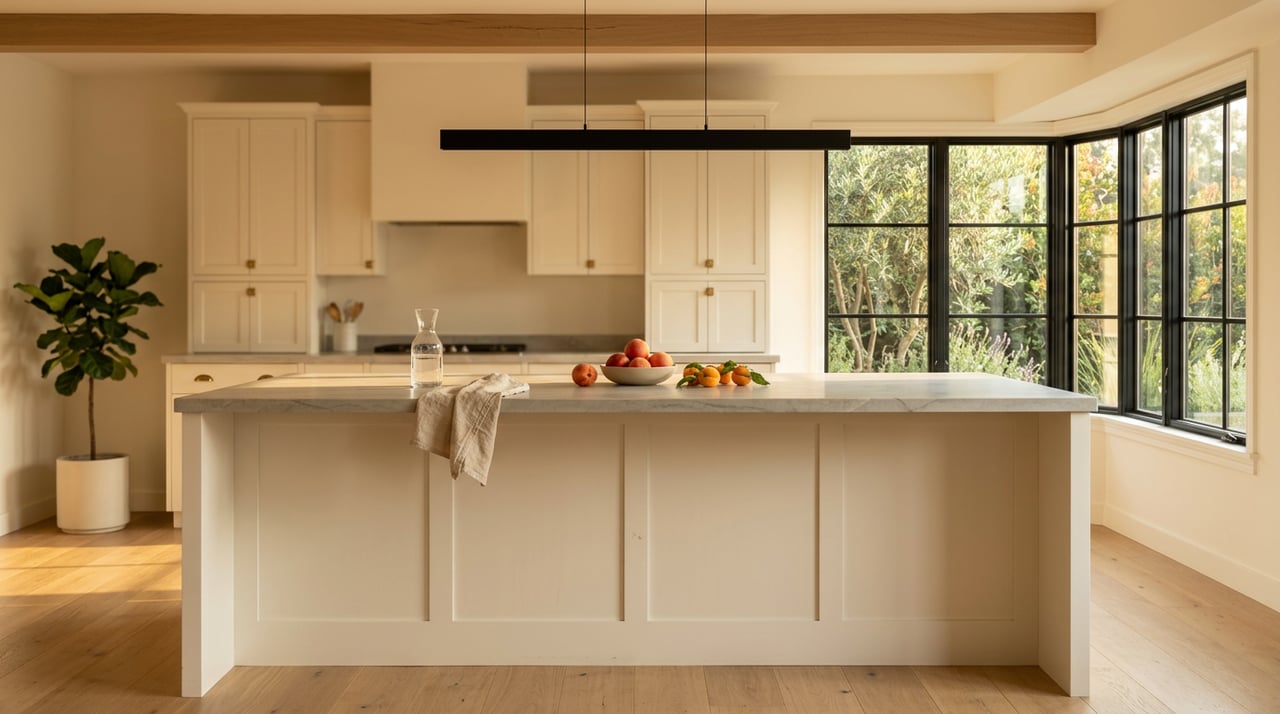
It doesn’t see the remodeled kitchen you completed last year, the updated bathrooms, the quality of your landscaping, the natural light in the living room, or the fact that your home has been meticulously maintained.
Those details can make a meaningful difference when buyers are deciding what a home is worth.
Your Home Is More Than a Number
One of the biggest challenges with online home estimates is that every property has unique characteristics.
Two homes on the same street may have very different values because of factors such as:
An automated valuation model can account for many data points, but it may not fully understand the nuances that make one property more desirable than another.
And when it comes to real estate, those nuances matter.
Recent Comparable Sales Can Tell a Different Story
One of the most important factors in determining market value is looking at what similar homes have actually sold for recently.
But simply looking at the three or four closest homes isn't enough.
A good comparative market analysis — often called a CMA — considers how those properties compare to yours.
For example, imagine your neighbor recently sold a similar-sized home for $1.8 million. At first glance, you might assume your home is worth approximately the same.But what if your neighbor's home had a completely remodeled kitchen and bathrooms, while yours hasn't been updated in 15 years?Or what if your home has a larger lot, better views, a more desirable floor plan, or an additional bedroom?
Those differences could significantly impact the value.
The goal isn't simply to find similar homes. It's to understand how those homes compare to yours.
Market Conditions Matter, Too
Real estate values aren't static.
The value of your home can change based on current market conditions, buyer demand, interest rates, inventory levels, and what is happening in your specific neighborhood. For example, a home that was worth $2 million six months ago may not necessarily be worth exactly $2 million today. If inventory has decreased and buyer competition has increased, values could be moving upward.
On the other hand, if more homes are coming onto the market and buyers have more choices, sellers may need to price more strategically.This is especially important in competitive markets like Silicon Valley, where micro-market conditions can vary significantly from one neighborhood to the next.
The List Price Isn't Always the Sale Price
Another important distinction is the difference between asking price and market value.
A home can be listed at $1.5 million and ultimately sell for $1.8 million. Another home could be listed at $1.8 million and eventually sell for $1.6 million.The list price alone doesn't tell the whole story.
Pricing strategy, marketing, presentation, timing, buyer demand, and negotiation can all influence the final outcome.
That's why looking at a Zestimate or even the list prices of nearby homes doesn't necessarily tell you what your property could realistically sell for.
Improvements Can Be Difficult for Online Estimates to Capture
Have you recently remodeled your home?
Maybe you've:
Some improvements may eventually appear in public records, but an online estimate may not immediately reflect the full impact of those changes. And even when the data is updated, an algorithm doesn't necessarily understand the quality or appeal of the improvement. A professionally remodeled kitchen and a basic cosmetic kitchen update aren't necessarily equal in the eyes of buyers.
So, Should You Ignore Your Zestimate?
Not at all.
A Zestimate can be a useful starting point for understanding the general range of your home's estimated value.
The key is not to treat it as a guaranteed selling price. Think of it as one piece of information — not the entire picture. If you're making an important financial decision based on your home's value, you'll want to look beyond an automated estimate.
What Is a Better Way to Determine Your Home's Value?
A more accurate approach is to evaluate your property using current, relevant market data and comparable properties.
A professional CMA typically considers:
1. Recent comparable sales
What similar homes have actually sold for recently.
2. Current competition
What buyers are currently seeing when they search for homes similar to yours.
3. Property condition
How your home's condition compares with competing properties.
4. Improvements and features
Renovations, upgrades, lot characteristics, views, floor plan, and other features that can affect buyer demand.
5. Neighborhood and location
Not all locations within the same city or ZIP code are valued equally.
6. Current market conditions
Inventory, buyer activity, interest rates, and local market trends.
7. Pricing strategy
How the property could be positioned to attract the right buyers and maximize its potential. The result is a much more complete picture than a single online number.
Your Home's Value Is What Buyers Are Willing to Pay
At the end of the day, market value isn't determined by Zillow, your neighbor, or even what you paid for your home. It's ultimately influenced by what qualified buyers are willing to pay for your property in the current market. That number can be different from an automated estimate — sometimes by a little and sometimes by quite a bit.
If you're considering selling, thinking about refinancing, planning your next move, or simply curious about how much your home may be worth today, getting a professional opinion can give you much more useful information than relying on an online estimate alone.
Curious What Your Home Could Actually Be Worth?
I'd be happy to prepare a complimentary, no-obligation market analysis of your home and walk you through the factors that are influencing its value today.
Whether you're thinking about selling now, sometime down the road, or simply want to stay informed about your home's value, I'm always happy to be a resource.
Your Zestimate is a starting point. Your home's true market value deserves a closer look.
If you'd like to know what your home could realistically sell for in today's market, reach out — I'd be happy to help.
Stay up to date on the latest real estate trends.


I’m excited to guide you on your real estate journey in the heart of Silicon Valley. Let’s connect and take the first step toward your next great investment.