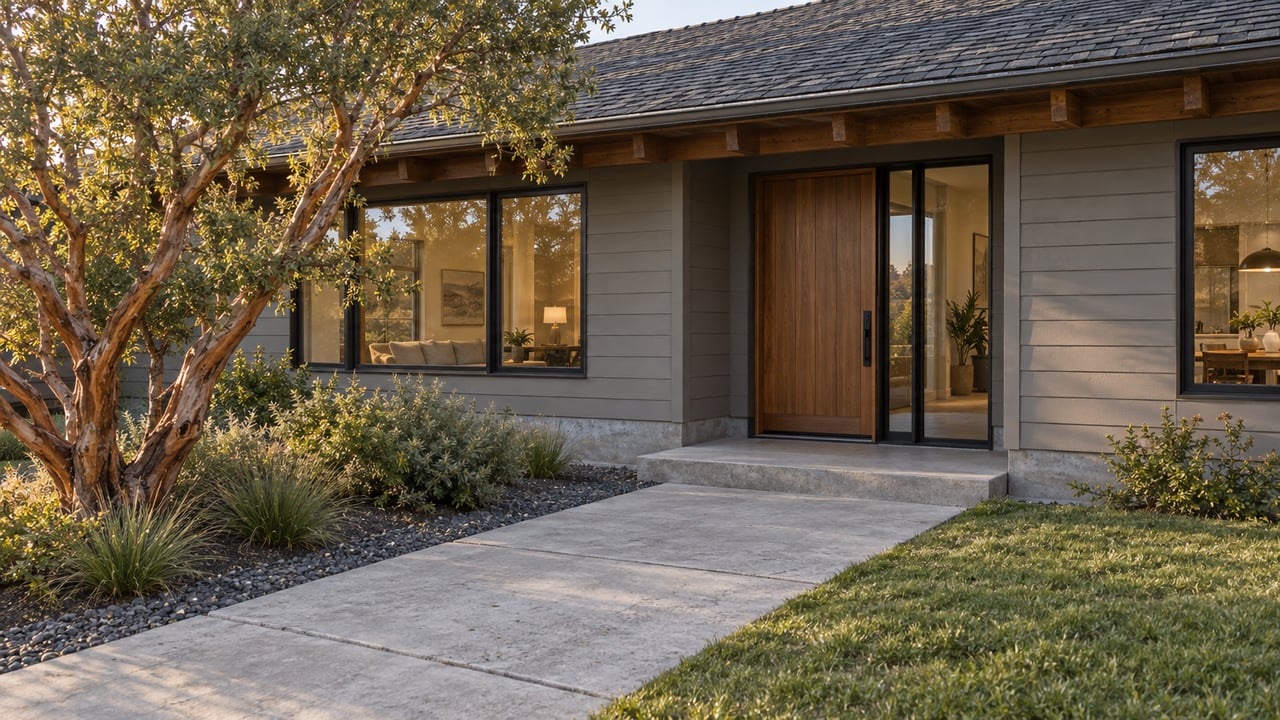
Sunnyvale Eichler Ownership Costs: Radiant Heat and Roof Maintenance
October 1, 2026
October 1, 2026
The first walk-through goes well. Floor-to-ceiling glass runs the length of the living room. The ceiling holds its original post-and-beam lines. A private atrium sits at the center of the house, open to the sky, exactly the way Joseph Eichler's architects drew it seventy years ago. The buyer starts doing math on square footage and comparable sales down the street, the ordinary math anyone does on any house.
The math that actually decides this deal happens later, during the inspection contingency, when someone runs a pressure test on the pipes buried in the concrete slab under that atrium. What that test finds, and what kind of metal those pipes are made of, changes the real cost of the house by tens of thousands of dollars. None of that shows up in the listing photos. Most of it doesn't show up in the asking price either.
Sunnyvale holds one of the densest concentrations of Eichler homes anywhere in the country: 16 tracts totaling roughly 1,100 houses, most of them clustered in the 94087 zip code in neighborhoods like Birdland, Ponderosa Park, and Cherry Orchard. That density matters because it means Sunnyvale's housing stock isn't one market with a single median. It's two markets wearing the same city name: conventional stucco and wood-frame construction on one side, and a meaningful slice of mid-century post-and-beam homes on the other, each with a different cost structure once you own it rather than just view it.
The same pattern shows up across the wider Mid-Peninsula. Mountain View has its own Eichler tract in Monta Loma. Palo Alto has Greenmeadow. San Jose's Willow Glen holds the Fairglen tract. Sunnyvale simply has more of this housing type concentrated in fewer square miles than almost anywhere else in the region, which means more buyers here run into the same underwriting problem without realizing it's a pattern rather than a one-off surprise.
Every Eichler was built around a radiant heating system: a network of pipes embedded directly in the concrete floor, circulating hot water to warm the house from the ground up. It's an elegant piece of engineering when it works, and it's part of what buyers are paying for when they fall for the design. It's also the single biggest variable in what that house actually costs to own.
The pipe material is what decides the outcome. Homes built during the early 1950s, when the Korean War created a copper shortage, often used galvanized steel piping instead, and steel corrodes over decades in a way copper does not. Later Eichler tracts, including many built in Sunnyvale, standardized on copper lines that can run for generations with only minor spot repairs. Two houses in the same neighborhood, built a few years apart, can be carrying completely different long-term liabilities under the same style of floor.
A buyer can't tell which one they're looking at from the street, or from the listing description, or even from the neighborhood's reputation. The only way to know is to ask for the system's service history and bring in a specialist who works on radiant systems specifically, not a general HVAC contractor, before the contingency period closes. The cost tiers involved are wide enough that guessing is expensive:
That range, from a few hundred dollars to six figures, is exactly why a generic home inspection report doesn't settle the question. It tells you whether the house has heat today. It doesn't tell you which of those cost tiers you're actually standing in.
The same design decisions that give Eichlers their signature look, flat or gently sloped rooflines instead of a traditional pitch, create a second maintenance category buyers routinely underprice. Water pools on flat surfaces in a way it doesn't on a steep roof, and older membranes can fail at seams and flashing if they haven't been modernized. Atrium drains and scuppers need their own attention, since a clogged drain in an open-air atrium sends water somewhere it shouldn't go. Spot repairs stay modest. A full membrane replacement moves into the low five figures.
None of this makes an Eichler a bad house to own. It makes it a house where the ownership cost and the purchase price are two separate numbers, and where a buyer who only budgets for the second one is going to renegotiate the first one during escrow, after they've already fallen for the atrium.
This same product split explains something that looks confusing on the surface: Sunnyvale's citywide price data doesn't agree with itself right now. Over the three months ending June 2026, Redfin's tracking put the median sale price at $1.8 million, down 17.1% from the same period a year earlier. Movoto's September 2026 read on listed homes showed a median of $1.48 million, down slightly both month over month and year over year. Altos Research, in its week-of-September-27 report, put the median list price at $2,541,500, describing a tight seller's market with a Market Action Index of 79, up from 77 the month before.
Three sources, describing the same city in roughly the same stretch of 2026, land more than a million dollars apart. That's not measurement error. Sunnyvale sells a small enough number of homes in any given month that the mix of what happened to close, a handful of conventional ranches versus a handful of Eichlers versus a new build near the tech corridor, moves the median more than actual appreciation or depreciation does. A city with this much product variance inside its borders will always produce a volatile, sometimes contradictory median, because the median is averaging together houses that cost fundamentally different amounts to own.
For a buyer comparing Sunnyvale against a neighboring city, the citywide number is a starting point, not an answer. The number that actually matters is what a specific house, in a specific tract, with a specific piping material and roof condition, will cost across a ten-year hold. That number lives in the service records and the inspection report, not in the market summary.
Does every Eichler in Sunnyvale still have its original 1950s radiant system? No. Many have been repiped in copper, converted to mini-split systems, or had their boilers replaced over the decades. The point isn't that every house has a problem. It's that a buyer can't tell which category a given house falls into just by looking at it.
Is an Eichler a worse investment than a conventional home the same size? Not automatically. Over a ten-year hold, an Eichler can run more expensive to maintain once you account for radiant specialists and periodic roof work, but that's a pricing question, not a reason to avoid the style. Buyers who price the maintenance correctly at the offer stage, rather than discovering it at inspection, tend to have a much smoother path to closing.
What should I actually request before removing contingencies? Ask for the boiler's service history and install date, any record of past slab leaks or repairs, and documentation of the roof membrane's age and last inspection. If those records don't exist, budget for a specialist evaluation before you write your final number, not after.
If you're weighing an Eichler in Birdland against a conventional home in Cherry Chase, or trying to figure out what a specific Sunnyvale property is actually worth once its maintenance profile is priced in, Ashley Mateo can walk through the comparison with you. Get your instant home valuation and use it as a starting point for the conversation, not the final word.
This article is general information, not legal, tax or financial advice. Consult a qualified professional about your situation.
Stay up to date on the latest real estate trends.
I’m excited to guide you on your real estate journey in the heart of Silicon Valley. Let’s connect and take the first step toward your next great investment.