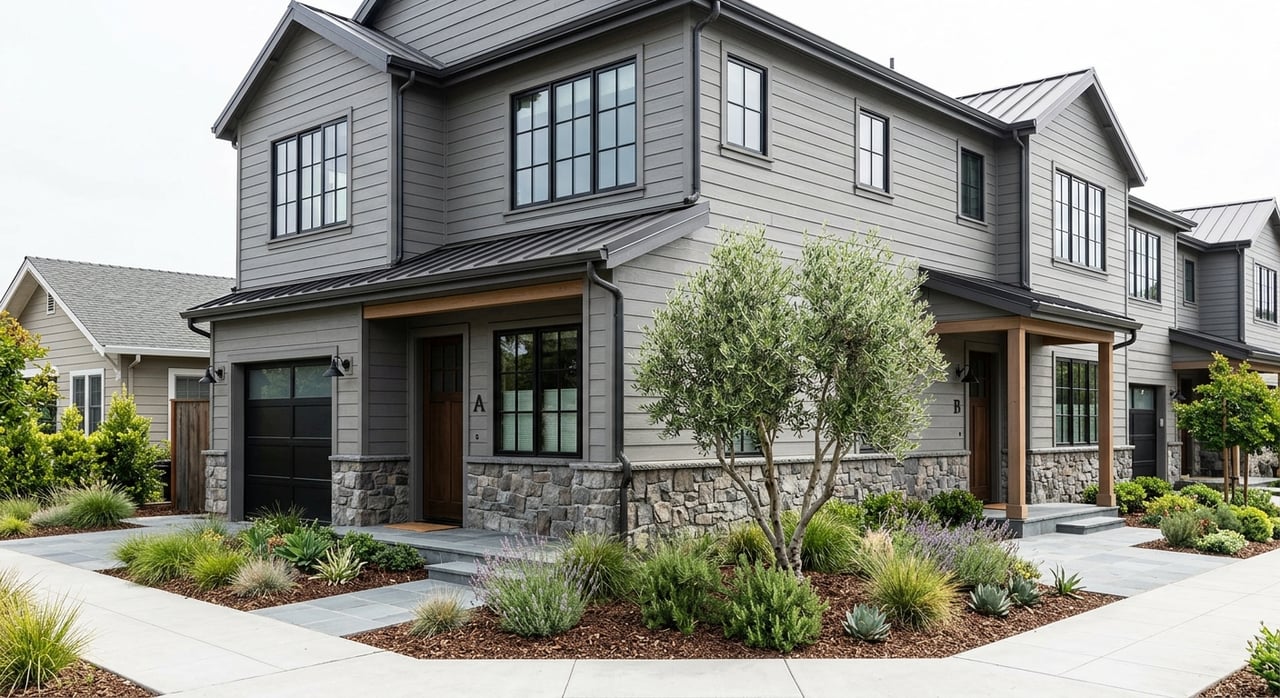
San Jose Condo And Townhome Buying Guide For Tech Pros
July 9, 2026
July 9, 2026
Thinking about buying a condo or townhome in San Jose while juggling a demanding tech job? You are not alone. For many buyers, attached housing offers a more realistic entry point than a detached home, but the details can feel complicated fast. This guide will help you compare prices, weigh condo versus townhome tradeoffs, and focus on the features that matter most for hybrid work and everyday convenience. Let’s dive in.
If you are shopping in San Jose, it helps to know that attached-home pricing can look very different depending on whether you are reading listing data or closed-sale data. Current Redfin snapshots show a median listing price of $660,000 for condos and $959,000 for townhomes in San Jose. In nearby Santa Clara, the same snapshot shows $720,000 for condos and $1.3 million for townhomes.
Sold-price data tells a slightly different story. The City of San José’s recent reports showed townhome medians around $795,000 to $830,000, and the City’s Q1 2026 update reported a $826,250 median sale price for Santa Clara County condo and townhome properties. These numbers are not direct apples-to-apples comparisons, but they do show a clear pattern: attached homes often offer a lower entry point than detached homes while still reflecting the high-cost South Bay market.
If you are also looking across the Bay, the East Bay may stand out on price. Bay East’s May 2026 attached-home reports showed median sale prices of $521,000 in Oakland, $605,000 in Hayward, and $685,000 in Berkeley.
That price gap can be meaningful, especially if you are trying to balance monthly payment, cash reserves, and long-term flexibility. Still, price alone usually does not settle the decision. Your commute, transit access, daily routine, and the kind of housing stock available in each area can change the equation quickly.
Attached homes in San Jose can also offer a more manageable search process than detached homes. Redfin’s current snapshot showed 356 condos for sale in San Jose with about 48 days on market and an average of 3 offers. Townhomes showed 168 listings, about 32 days on market, and an average of 1 offer.
That does not mean every listing is easy or every offer will be straightforward. It does suggest that if you shop carefully, stay organized, and move decisively on the right property, you may have room to be strategic.
One of the biggest mistakes buyers make is assuming the word condo or townhome tells you everything about maintenance, privacy, or ownership. In California common-interest developments, both property types typically involve automatic membership in a homeowners association.
According to the California Department of Real Estate, the association board manages the project, collects assessments, pays bills, and helps preserve the property. HOA dues can fund day-to-day operations and long-term reserves for future repairs and replacements. In real life, that means the better question is not “Which is always better?” but “How does this specific community handle maintenance and costs?”
California Civil Code Section 4525 requires sellers to provide key HOA documents for many attached-home sales. These can include:
These documents matter because they help you understand how the community functions before you remove contingencies. They can also help you spot issues that may affect your monthly budget or future plans.
If you are a busy tech professional, these are often the most useful questions to ask:
A well-run HOA can simplify ownership. A poorly understood HOA can create surprises. That is why reviewing the budget, reserve materials, and recent board minutes is so important.
San Jose’s planning framework concentrates much of its future growth in urban villages. The city describes these as walkable, bike-friendly areas with transit access and a mix of housing and jobs. For attached-home buyers, that matters because these areas often hold the strongest concentration of condo and townhome options.
Approved examples include Downtown, Berryessa BART, Capitol Caltrain, Five Wounds, North 1st Street, West San Carlos, Santana Row/Valley Fair, South Bascom, and Winchester Boulevard. If you want a home that can support a lower-car lifestyle or reduce commute friction, these areas are worth close attention.
Berryessa is one of the clearest examples of attached-housing growth in San Jose. The city says the Berryessa BART Urban Village surrounds San José’s first BART station and includes single-family homes, townhouses, and small apartments. The plan calls for 4,814 dwelling units and 22,100 jobs, while VTA projects 25,000 daily riders by 2030.
For you, that can translate into practical benefits. Transit access, a more connected street network, and a growing mix of uses can make daily life easier if you want flexibility beyond a car-only routine.
North San José is another area to watch if you prefer newer housing near major employment centers. City policy guides new residential and mixed-use development there, along with planning for streets, parks, trails, open space, and public facilities.
This can be appealing if you want more modern product and a location that aligns with a work-heavy schedule. It is also a good reminder that attached housing is not just a compromise play. In the right location, it can be a smart lifestyle choice.
Communications Hill stands out as a dense, pedestrian-oriented residential area south of downtown. The city describes it as a highly urbanized neighborhood with about 4,700 residential units envisioned and about 2,500 already built.
The city also notes its proximity to downtown, freeways, light rail, and Caltrain. If you want attached housing with a more structured, planned feel and strong regional connections, this is an area worth comparing with other South Bay options.
If your search includes Santa Clara, pay attention to the El Camino Real corridor. The city is guiding that area toward a more pedestrian- and transit-oriented mix of residential and retail uses.
Current project pages show several townhome-focused developments there, including a 60-unit project at 3155 El Camino Real, a proposal with 159 townhomes on the southern portion of the 2610 El Camino Real site, and a 22-unit project at 3378 to 3386 El Camino Real. For buyers cross-shopping San Jose and Santa Clara, this points to a corridor-style pattern of attached housing rather than a more traditional suburban layout.
If you work in tech, your home often needs to do more than provide a place to sleep. It may also need to support calls, focused work, reliable connectivity, and a routine that changes from day to day.
Realtor.com’s 2025 home-trends analysis found large year-over-year increases in listings mentioning hardwired Ethernet or Cat6, soundproofing, and home office or Zoom room spaces. That does not guarantee every attached home has those features, but it does show where buyer demand is moving.
When you walk a condo or townhome, focus on everyday usability:
These details often matter more than flashy finishes. A beautiful kitchen is great, but if the home cannot support your workday and routine, it may not feel right after move-in.
A strong attached-home purchase usually comes down to balancing three things: budget, location, and governance. Budget tells you what is realistic. Location shapes your daily life. Governance, meaning the HOA documents and financial health, affects your long-term experience.
That is why it helps to compare properties beyond surface-level photos. Two townhomes at similar prices can feel very different once you review dues, reserves, parking rules, rental limits, and the condition of common components.
For many San Jose buyers, the goal is not finding a perfect property. It is finding the right fit for how you actually live and work now, with enough flexibility for what comes next.
If you are weighing San Jose, Santa Clara, or even East Bay alternatives, a grounded local strategy can save you time and help you avoid expensive missteps. When you want practical guidance, neighborhood context, and hands-on buyer support, connect with Ashley K Bartholomew.
Stay up to date on the latest real estate trends.

I’m excited to guide you on your real estate journey in the heart of Silicon Valley. Let’s connect and take the first step toward your next great investment.